This is one of the biggest things that kept me stuck for years.
I kept asking:
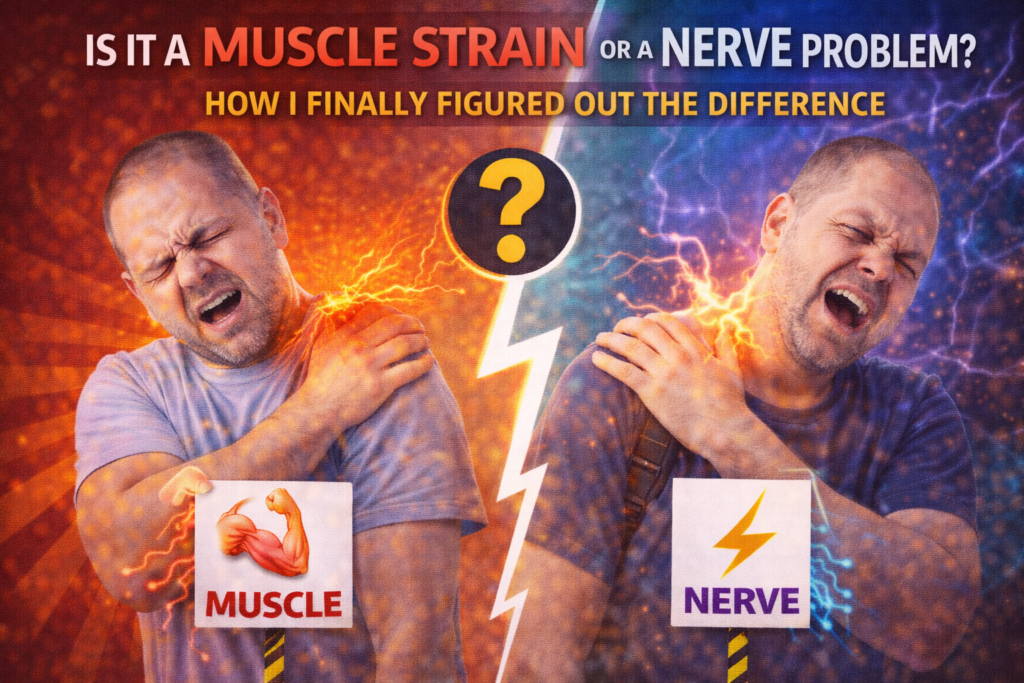
“Is this just a tight muscle… or something else?”
Because the pain didn’t act normal.
Sometimes it felt like muscle soreness.
Other times it shot down my arm.
Sometimes resting helped… sometimes it made it worse.
It didn’t follow any clear rules.
And that’s exactly why it took so long to figure out.
The Question That Changes Everything
Here’s the simplest way I can put it now:
If your pain changes instantly based on position… it’s probably not just muscle.
That was the biggest clue I missed.

What Muscle Pain Usually Feels Like
Muscle pain is pretty predictable.
Most of the time:
- It feels sore, tight, or achy
- It stays in one area
- It gets worse when you use it
- It improves with rest
Even if it’s bad, it usually follows those basic patterns.

What Nerve Pain Feels Like (What I Was Actually Dealing With)
This is where things get different.
Nerve-related pain tends to:
- Travel from your neck into your shoulder or arm
- Feel sharp, burning, or electric
- Change quickly depending on position
- Get worse when something compresses or stretches the nerve
That last one is key.
Because that’s exactly what I was experiencing.
The Pattern That Gave It Away
Over time, I noticed something very specific:
- Letting my arm hang → worse
- Relaxing my shoulder → worse
- Pulling my shoulder back and up → better
That doesn’t match muscle pain.
That matches nerve compression.

I broke this down more in
https://spinerecover.com/why-your-arm-pain-gets-better-when-you-lift-your-shoulder-the-clue-i-missed-for-years/

And also here:
https://spinerecover.com/why-my-neck-and-shoulder-pain-gets-worse-when-i-relax-my-arm/
Once I connected those patterns, everything started to make more sense.
What This Usually Points To
In cases like this, it often lines up with:
Thoracic Outlet Syndrome
This happens when nerves get compressed in a tight space between your neck and shoulder.
That space includes:
- Muscles
- Your collarbone
- Your rib
And when that space gets tight, it can press on the nerves going into your arm.
Why It Feels So Confusing
This kind of condition is dynamic, meaning:
- It changes with movement
- It changes with posture
- It changes with load
That’s why one moment you feel fine… and the next moment it flares up.
Research actually describes this as compression that changes depending on position, which makes it harder to diagnose.
The Backpack Test (This Was Huge for Me)
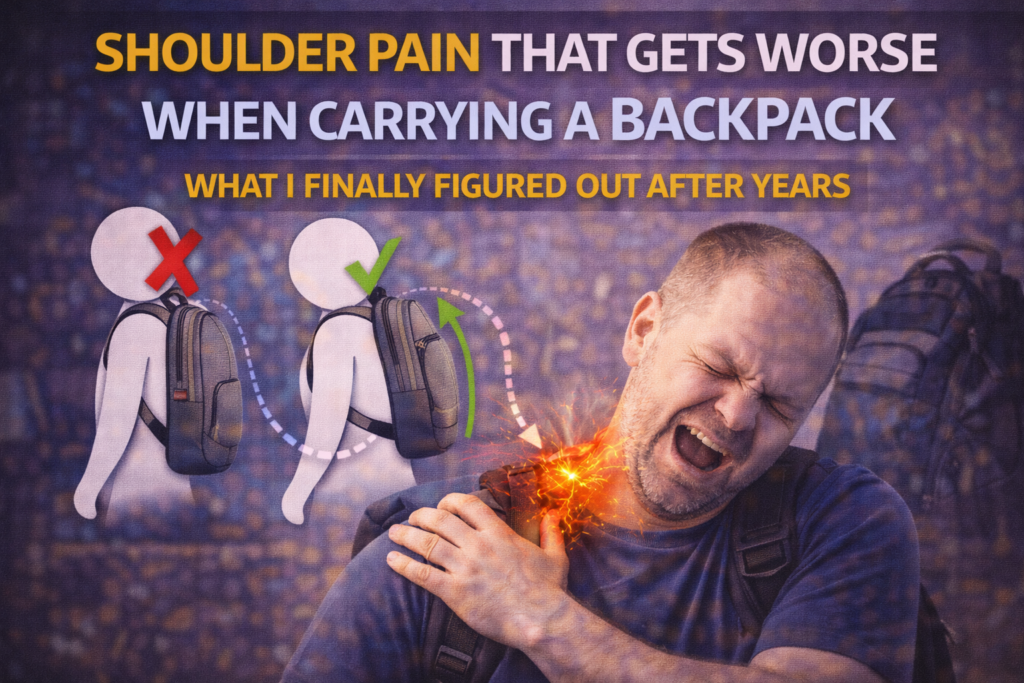
One of the easiest ways I realized this wasn’t muscle:
Carrying anything on my shoulder made it worse fast.
- Strap pulls shoulder down
- Space gets tighter
- Nerve gets irritated
That’s not how muscle soreness behaves.
I explain that more here:
https://spinerecover.com/shoulder-pain-that-gets-worse-when-carrying-a-backpack-what-i-finally-figured-out-after-years/
Why Muscle Treatments Didn’t Fix It
For a long time, I treated it like muscle pain.
I tried:
- Stretching
- Massage
- Rest
And while some of that helped temporarily, it never fixed the problem.
Because the issue wasn’t just tight muscle.
It was pressure on a nerve.


Another Key Difference: Location of Pain
This helped me separate it clearly:
Muscle pain:
- Stays local
- Easy to point to one spot
Nerve pain:
- Moves
- Travels down arm
- Harder to pinpoint
That traveling pain is a big giveaway.
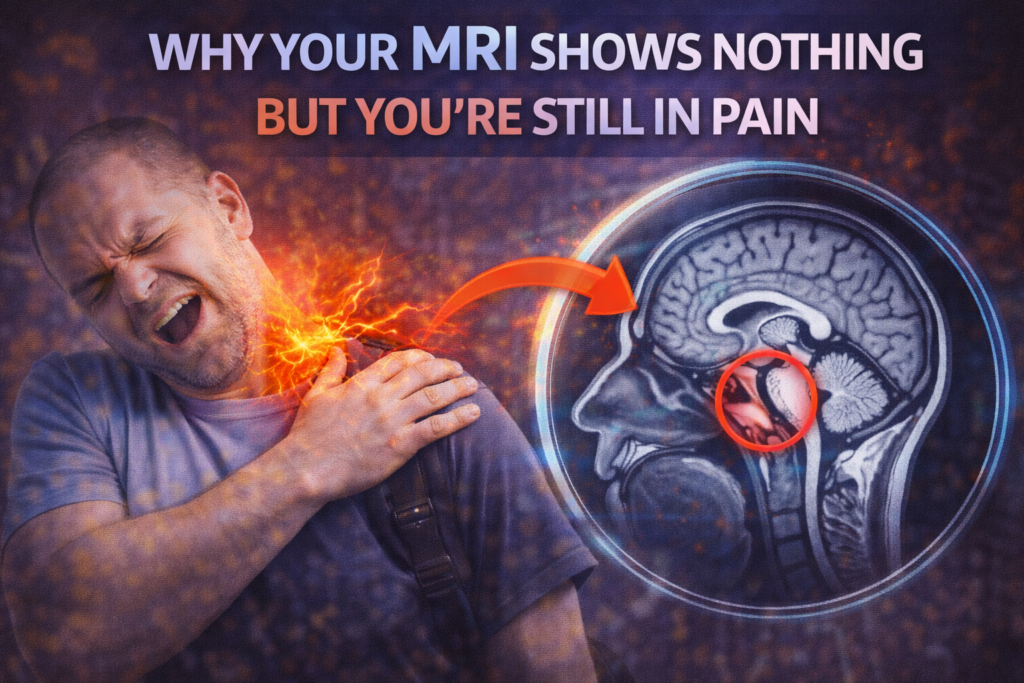
Why MRI and Tests Can Miss This
This was one of the most frustrating parts.
Everything looked normal.
But the pain was still there.
That’s because:
- Imaging is done at rest
- Your shoulder isn’t under load
- The compression isn’t happening at that moment
So nothing shows up.
I talk more about that here:
https://spinerecover.com/why-your-mri-shows-nothing-but-youre-still-in-pain/
What I Was Doing That Made It Worse
Without realizing it, I was:
- Letting my shoulder hang constantly
- Sitting with rounded shoulders
- Carrying weight on one side
- Ignoring positions that actually helped
All of that kept the nerve irritated daily.
What Actually Helped Me Start Improving
Once I understood the difference, I stopped guessing.
I focused on what actually changed the pain.
Keeping my shoulder in a better position
Not forcing anything, just avoiding that forward/down collapse.

This ties directly into
https://spinerecover.com/fix-your-posture-fast-without-thinking-about-it/
Fixing my daily setup
Your environment matters more than you think.
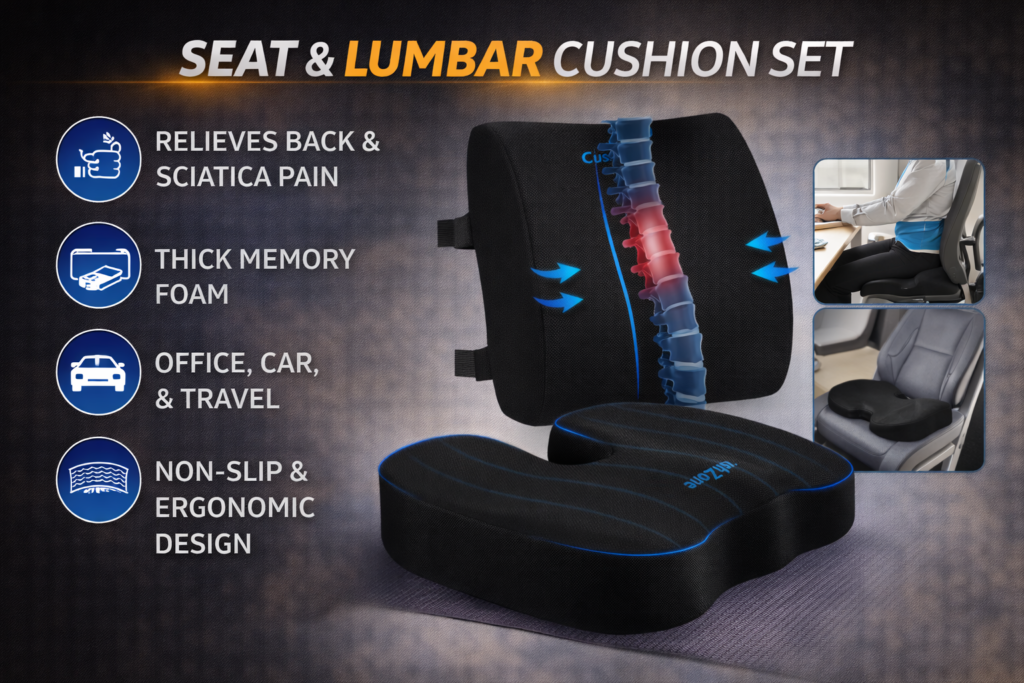
I explain what helped here:
https://spinerecover.com/the-simple-seat-upgrade-that-fixes-back-pain-while-sitting/
Improving sleep positioning
If you’re in a bad position all night, it adds up.
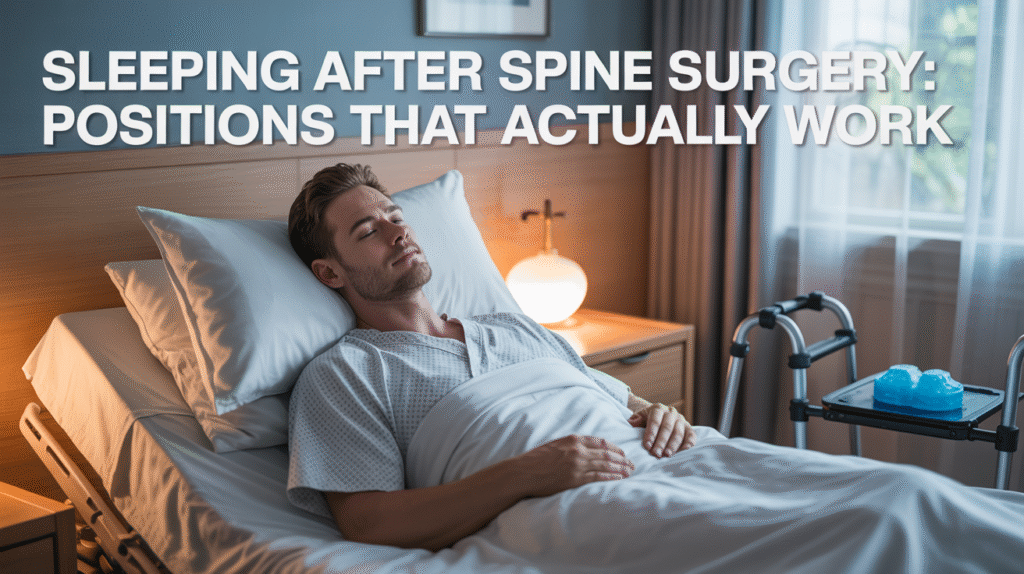
Here’s what worked for me:
https://spinerecover.com/sleeping-after-spine-surgery-positions-that-actually-work/
Supporting my neck properly

This made a big difference over time:
https://spinerecover.com/finally-wake-up-without-neck-pain/
The Biggest Takeaway
If I could go back and tell myself one thing, it would be this:
Not all pain is muscle pain.
And treating nerve pain like muscle pain will keep you stuck.
If You’re Trying to Figure This Out
Pay attention to this:
- Does your pain move or travel?
- Does position change it instantly?
- Does lifting or adjusting your shoulder help?
If yes…
You’re likely dealing with something deeper than just a strain.
Author
Dax – Founder of SpineRecover
About the Author
I’ve lived through years of spine and nerve-related pain, including L5-S1 fusion surgery and ongoing issues that didn’t match what scans or typical diagnoses showed.
Everything I share here is based on real experience, trial and error, and figuring out what actually works in everyday life. SpineRecover is where I document that journey so others can shortcut the years it took me to understand it.