If you’ve ever noticed your neck and shoulder pain actually gets worse the moment you try to relax… you’re not alone. I went through this exact thing for years, and it made no sense at all.

You’d think relaxing would help. Every doctor tells you to “just relax your shoulders.” But for me, the second I let my arm hang or my shoulder drop, the pain would shoot from my neck down into my shoulder and even into my arm.
And the weirdest part?
If I pulled my shoulder slightly back and up… it felt better.
That one detail ended up changing everything.
What I Experienced (And Maybe You Are Too)
For years, I dealt with:
- Pain starting in my neck and running into my shoulder
- That pain sometimes traveling down my arm
- Carrying anything on my shoulder making it way worse
- Letting my arm hang naturally causing more pain
- Lifting or tightening my shoulder actually helping
I even went through major spine issues, including surgery, and still had this same pain pattern that didn’t go away.
That’s when I realized something important:
This wasn’t just a “muscle problem.”



Why Relaxing Your Shoulder Can Make Pain Worse
This is the part nobody really explains well.
When you relax your shoulder and let your arm hang:
- Your shoulder drops downward
- The space between your neck and shoulder gets tighter
- The nerves that run from your neck into your arm get stretched or compressed
That’s why the pain gets worse.
But when you pull your shoulder back and slightly up:
- You open that space back up
- You take pressure off those nerves
- The pain eases, even if only temporarily
That’s not normal muscle behavior. That’s a nerve issue.
What This Usually Points To
Based on everything I went through, this lines up very closely with:
Thoracic Outlet Syndrome
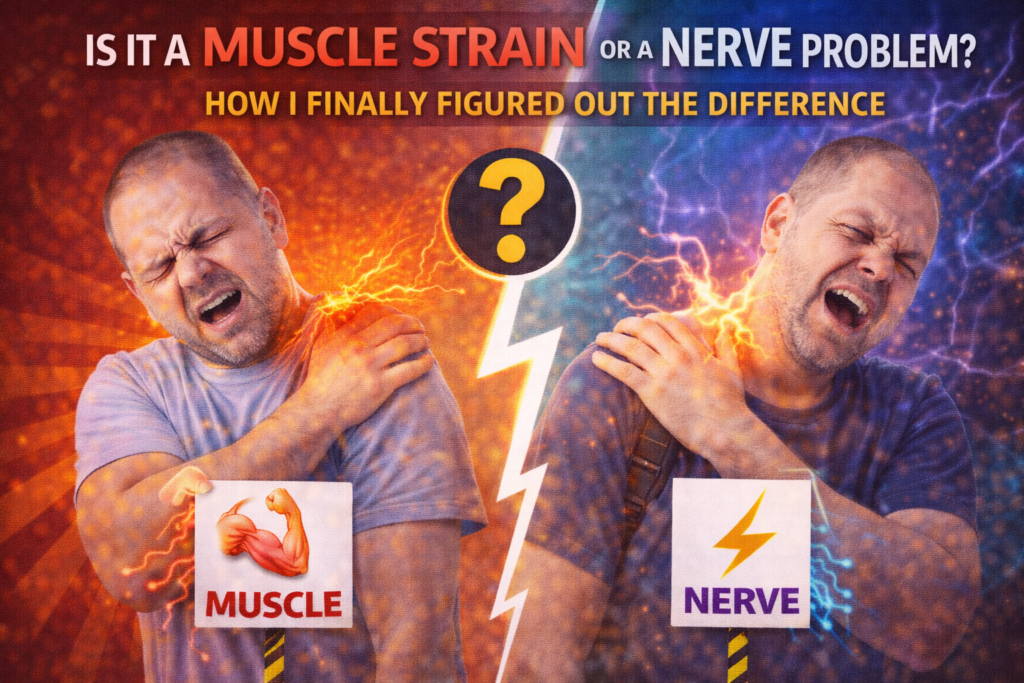
This happens when the nerves that travel from your neck into your arm get compressed somewhere between your neck and shoulder. That distinction between muscle pain and nerve-related symptoms is explored further in Is It a Muscle Strain or a Nerve Problem?.
The tricky part is this:
It doesn’t always show up clearly on scans.
Why My MRI and Surgery Didn’t Fix It
I had imaging done. I had surgery for my spine.
But this pain stayed.
Here’s why:
- MRIs mostly show structure, not movement
- This kind of issue depends on position
- The compression often happens outside the spine
So everything can look “fine” on paper, while you’re still dealing with real pain every day.
That’s something I wish I understood way earlier.
The Exact Trigger That Made It Obvious

One of the biggest clues for me was carrying weight on my shoulder. That same position-related pattern is explored in Shoulder Pain That Gets Worse When Carrying a Backpack, which focuses on pain triggered by shoulder straps and carried weight.
Something as simple as a strap across my shoulder would:
- Pull my shoulder down
- Increase pressure on that nerve area
- Make the pain way worse
But the moment I supported that weight or adjusted my shoulder position, the pain would ease.
That’s when it finally clicked that this was mechanical.
The Real Cause Most People Miss
This usually comes down to a few things working together:
Tight muscles in the wrong places
- Front shoulder (pec minor area)
- Side of neck (scalenes)
These can tighten over time and compress the nerve.
Shoulder position habits
Over time, your body gets used to:
- Slightly rounded shoulders
- Shoulder sitting forward and down
That position reduces space where your nerves pass through.
Repetitive strain
Daily life adds up:
- Carrying things
- Working with arms forward
- Sitting for long periods
It slowly reinforces the problem.
Why This Goes Undiagnosed for Years
This is one of the most frustrating parts.
Most people are told:
- It’s just tight muscles
- It’s posture
- Just stretch more
But stretching alone doesn’t fix nerve compression.

And because this problem changes with position, it can be missed during quick exams. Position-dependent symptoms can also help explain the experience described in Why Your MRI Shows Nothing But You’re Still in Pain, where imaging does not fully match the pain.
That’s how something like this can go on for years without real answers.
The Turning Point for Me
The biggest shift wasn’t a single treatment.
It was understanding this:
My pain wasn’t random.
It was based on position.
Once I realized that, I stopped trying random fixes and started paying attention to what actually changed the pain.


What Actually Started Helping
I had to focus on a few key things consistently.
1. Stop letting my shoulder hang under load
Anything that pulled my shoulder down made things worse.
Even small changes helped, like:
- Supporting weight differently
- Avoiding one-sided carrying
2. Keep my shoulder slightly back and up
Not stiff. Not forced.
Just a natural position where:
- My chest is slightly open
- My shoulder isn’t collapsing forward
This alone made a noticeable difference.
3. Fix how I sit and work
This tied directly into posture.

I found that small setup changes made a big impact, like what I shared in
fix your posture fast without thinking about it
4. Improve how I sleep
Sleeping position matters more than people realize.
If your shoulder collapses forward all night, it can keep the nerve irritated.
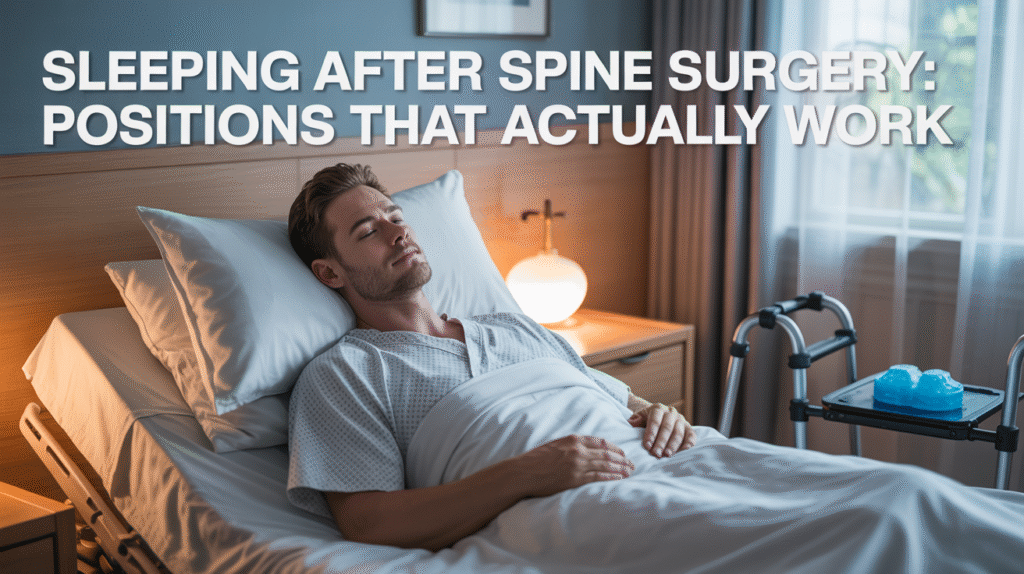
I go deeper into that here:
sleeping after spine surgery positions that actually work
5. Support my neck properly
A good pillow setup made a bigger difference than I expected.

I explain what worked for me here:
finally wake up without neck pain
What Didn’t Help (At Least For Me)
I tried a lot of things that didn’t fix the root issue:
- Random stretching routines
- Just trying to “relax more”
- Ignoring the position triggers
- Only focusing on muscle relief
Some of those gave temporary relief, but the pain kept coming back.

The Mental Side of This
This kind of pain messes with you.
Because:
- It doesn’t follow normal logic
- It doesn’t show clearly on tests
- It sticks around no matter what you try
I’ve been there.
That’s part of why I started documenting everything in
my daily recovery journal after l5-s1 fusion surgery
When you track what’s actually happening, patterns start to show.
What I’d Tell Anyone Dealing With This
If your pain:
- Gets worse when your arm hangs
- Gets better when your shoulder moves back and up
- Is triggered by straps or carrying weight
Then you’re probably dealing with a mechanical nerve issue, not just muscle pain.
That doesn’t mean you’re stuck with it forever.
But it does mean you need the right approach.
Where to Start
Focus on:
- Removing the positions that trigger it
- Reinforcing the positions that relieve it
- Supporting your body throughout the day
Even small changes done consistently can shift things over time.
Author
Dax – Founder of SpineRecover
About the Author
I’m not a doctor. I’m someone who has lived through years of back, neck, and nerve pain, including L5-S1 fusion surgery and ongoing recovery challenges.
Everything I share here comes from real experience, trial and error, and figuring out what actually makes a difference day to day.
SpineRecover is where I document what works, what doesn’t, and what I wish I knew earlier so others don’t have to go through the same confusion.